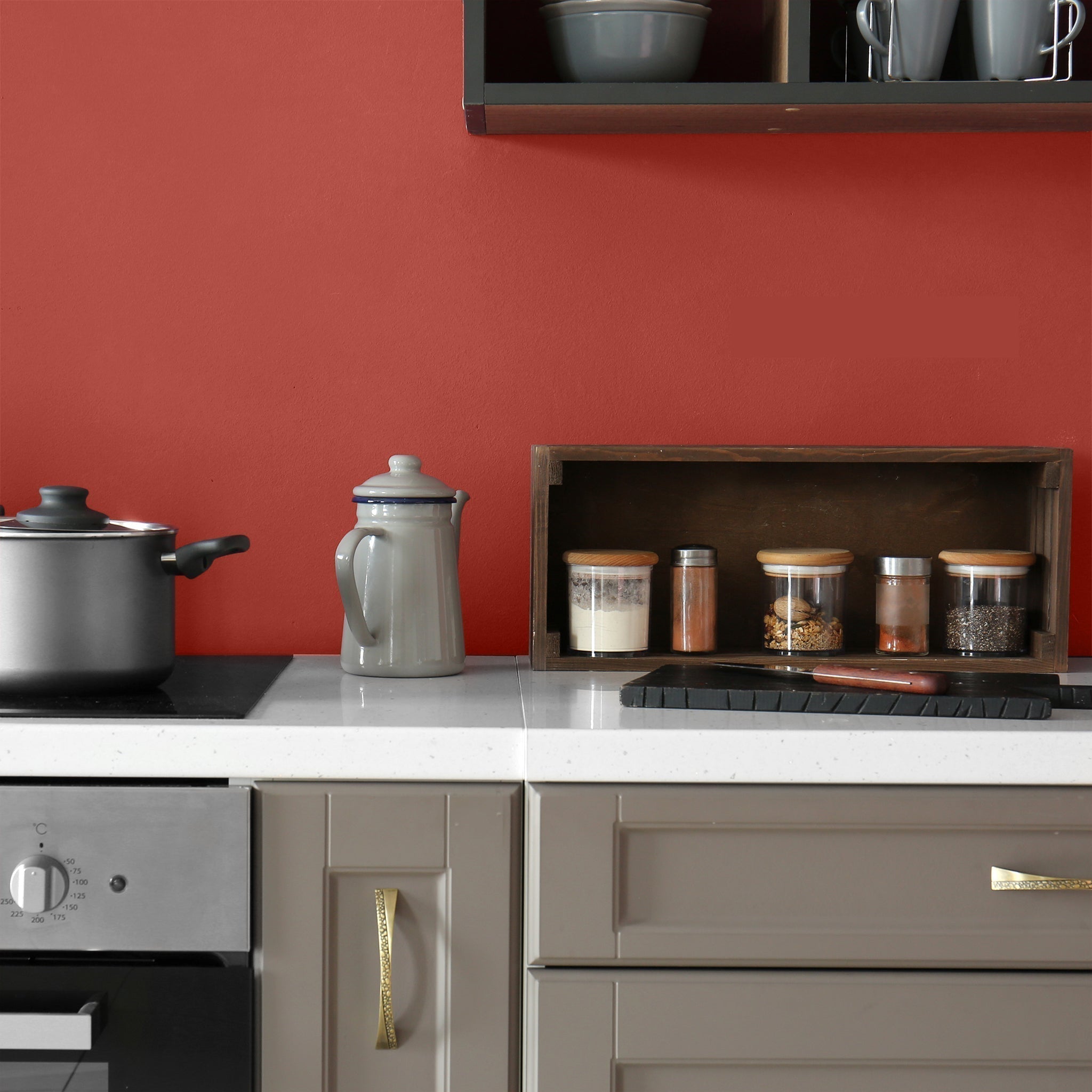
A kitchen renovation promises a complete transformation. It is the heart of the home, and updating it can redefine the whole house. But a full remodel, with its cost and disruption, keeps that change at arm's length for most people.
There is a more elegant route to the same result, and the secret is paint.
Painting your kitchen cabinets is the single highest-impact update you can do yourself. It closes the gap between the kitchen you have and the one you want, for a fraction of a remodel. This is not only a new colour. It is a premium finish that lifts the whole room.
Good Drop makes that simpler: a curated range of premium, Australian-made paint, delivered to your door, so the hardest part of the job is choosing the colour. This is your guide to doing it like a professional, with a flawless, durable finish that lasts.
Phase 1: Planning Your Kitchen Transformation
A premium result begins with a thoughtful plan. Time spent here, before you pick up a brush, is what separates a good finish from a professional one.
Choosing your colour
Colour is the exciting part, and the part most people labour over. A wall of swatches under hard retail lighting does not make it easier. We have already edited the range down, so you are choosing from colours worth living with rather than wading through hundreds.
Your cabinet colour sets the tone for the whole kitchen. A few things to weigh:
- Kitchen size and light. Soft whites, greiges, and pale greens make a small or dark kitchen feel larger and more open. Deeper hues like navy or olive create a dramatic, sophisticated mood in kitchens with good natural light.
- Existing finishes. Look at your benchtops, splashback, and flooring. Are they warm or cool toned? Choose a cabinet colour that complements those fixed elements for a cohesive palette.
- The 60-30-10 rule. For balance, your primary colour is about 60% of the room (walls), a secondary colour 30% (cabinets), and an accent 10% (hardware and decor).
- Test it in your kitchen. The surest way to choose with confidence is to see the colour in your own space. Order a sample and move it around the kitchen through the day to see how it shifts in morning, afternoon, and artificial light.
Selecting the right finish
The finish matters as much as the colour. For cabinets, the answer is semi gloss. It is the most durable and the most wipeable finish, which is exactly what a high-touch surface like cabinetry needs. Its slight sheen does show imperfections, which is why the prep below earns its keep.
Worth knowing: cabinets and walls take opposite finishes. Cabinets want semi gloss; your kitchen walls are better in low sheen, which we cover in our guide to the best paint for kitchen walls. Good Drop makes both in the same palette, so the colour stays consistent and only the finish changes. Browse the range.
Budgeting and timeline
Cost. A DIY cabinet repaint is remarkably cost-effective. Your main outlay is quality paint, primer, and tools, where a professional might charge thousands for the same job. Premium paint is the smart spend: it covers better, lasts longer, and finishes more beautifully, which saves money and effort over time.
Timeline. Be realistic. This is not a one-day job. For an average kitchen, set aside two full weekends, or about four to seven days. Rushing the prep and the curing time is the number one cause of a poor result.
Phase 2: Gathering Your Tools and Materials
Having everything on hand before you start makes the whole process smoother. Quality tools matter as much as quality paint for a professional, brush-stroke-free finish. Good Drop makes the kit for exactly this job.
Your essential checklist
For prep
- Drop sheets or plastic sheeting
- Painter's tape
- Sanding sponges or sandpaper
- A drill or screwdriver for removing hardware
- Clearly labelled bags for hinges and screws
For painting
- A quality primer. Use a stain-blocking primer, especially over dark or stained timber.
- Premium cabinet paint. Good Drop's semi gloss is formulated for a durable, beautiful finish.
- A quality angled brush for cutting in corners and detail.
- High-density foam or microfibre mini rollers (around 4 inch), the key to a smooth, factory-like finish on flat panels.
- Paint trays
- A tack cloth
The paint kit bundles most of these tools together if you are starting from scratch.
For safety
- Gloves
- Safety glasses
- A dust mask
Phase 3: The Step-by-Step Professional Process
This is where the transformation happens. Follow these steps closely. The quality of your preparation decides the quality of your final result.
Step 1: Prepare your workspace
Create a clean, organised painting station. A garage, covered patio, or spare room works well.
- Clear your benchtops completely.
- Lay down drop sheets to protect floors and benchtops.
- Mask off the splashback, walls, and any adjacent appliances with painter's tape.
Step 2: Remove all doors, drawers, and hardware
This is non-negotiable for a professional finish. Painting around hinges and handles never looks clean.
- Unscrew all hinges and remove the doors.
- Take out all drawers. If the drawer fronts are removable, take them off.
- Remove all handles, knobs, and pulls.
- Put each door's hinges and screws into a labelled bag. A simple system like "Top left door" or "Under sink" saves a real headache at reassembly.
Step 3: The critical clean
Kitchen cabinets carry years of grease and cooking film, even when they look clean. Paint will not adhere to a greasy surface. This is the most important prep step.
- Mix your degreasing cleaner to the manufacturer's instructions.
- Scrub every surface you plan to paint: door fronts and backs, frames, and drawer fronts.
- Wipe down with a clean, damp cloth to remove any residue.
- Let everything dry completely.
Step 4: Sand for adhesion
People often ask whether they really need to sand. For a durable finish, yes. You are not stripping the old finish, you are scuff sanding to degloss the surface and give the primer something to grip.
- With a medium-grit (120) sanding sponge, lightly scuff every surface. The goal is to remove the shine, not the colour.
- Pay attention to corners and edges.
- When you are done, the surface should feel slightly rough and look dull.
- Vacuum, then wipe away all dust with a tack cloth. Dust is the enemy of a smooth finish.
Step 5: Prime for a flawless foundation
Primer is the foundation of the job. It helps the paint adhere, blocks stains from bleeding through, and gives you a true, even colour in fewer coats.
- Set doors and drawer fronts on painting pyramids or timber blocks so you can reach the edges.
- With your angled brush, prime the detailed and recessed areas first.
- Follow immediately with the foam roller on the flat surfaces to smooth out brush marks. Keep a wet edge.
- Apply a thin, even coat to everything: doors (front and back), drawers, and frames.
- Let the primer dry fully to the instructions on the can.
- Give all surfaces a very light scuff with a fine-grit (220) sponge to smooth any imperfections, then wipe away the dust with a tack cloth.
Step 6: Apply the paint
Now the rewarding part. The key is patience and thin, even coats.
- First coat. As with the primer, brush the detail first, then roll the flat sections immediately. This minimises brush marks and creates that spray-like finish.
- Start with the backs of the doors. Let them dry, then flip to paint the fronts.
- Do not overload the brush or roller. Two thin coats beat one thick, drippy one.
- Let the first coat dry fully. Check the can for recoat times and do not rush.
- Second coat. Once the first is dry, apply the second with the same technique for full depth and durability. Very light or dark colours may want a third, but with a quality paint two coats are usually enough.
Step 7: Cure and reassemble
This last step takes the most patience. Dry is not the same as cured. Paint can feel dry in hours but takes days, sometimes weeks, to harden fully.
- Let it cure. Leave doors and drawers in a safe, low-traffic spot for at least three to five days before reassembling. The longer you wait, the more the finish resists chips and scuffs.
- Reassemble carefully. Reattach your hardware, or fit new hardware now.
- Hang the doors and slot the drawers back in.
- Adjust the hinges so every door sits perfectly aligned.
How to Paint Laminate or Melamine Cabinets
Painting laminate cabinets is possible and can look excellent, but it needs a specific primer. Laminate is non-porous plastic, so a standard primer will not adhere.
- Clean and sand. Both steps matter even more here. Degrease thoroughly, then sand to scuff the glossy plastic surface.
- Use a bonding primer. You need an adhesion primer made for glossy, hard-to-paint surfaces, sometimes called a bonding or super-grip primer. It creates the foundation your paint needs.
- Paint as normal. Once the bonding primer is on and dry, paint as in Step 6.
Your Transformed Kitchen Awaits
Step back and take it in. You have not only changed a colour, you have lifted the whole kitchen with a premium, professional-quality finish, with your own two hands. The result feels considered, calm, and entirely yours.
Ready to start? Order a sample, see the colour in your own light, and have premium, Australian-made paint delivered to your door.
Frequently Asked Questions
What kind of paint do you use on kitchen cabinets?
A premium interior paint in a semi gloss finish. Semi gloss is the most durable and wipeable finish, which suits a high-touch surface like cabinetry. Prepare and prime the surface first so the finish bonds and lasts.
Do I need to sand cabinets before painting?
Yes, lightly. You are not stripping the old finish, just scuff sanding with a medium grit to degloss the surface so the primer can grip. Skipping this is the most common reason a cabinet finish peels later.
Do I have to use a primer on kitchen cabinets?
Yes. Primer helps the paint adhere, blocks stains from bleeding through, and gives a truer colour in fewer coats. For laminate or melamine, use a bonding primer made for glossy surfaces.
How long does it take to paint kitchen cabinets?
For an average kitchen, set aside two weekends, or about four to seven days, including drying time between coats. Then allow three to five days of curing before normal use. Rushing the prep and curing is the main cause of a poor result.
Can you paint laminate or melamine cabinets?
Yes. The key is a bonding (adhesion) primer made for non-porous surfaces, because standard primer will not stick to laminate. Clean and sand thoroughly, apply the bonding primer, then paint as normal.